
Let me just say it straight.
If you didn’t sign it over, then it’s yours.
I’ve been holding off on saying this publicly for a while. Not because I didn’t have thoughts, but because I didn’t want to “rock the boat.” You know how it goes. But I’ve seen too much now. Too many stories. Too many people – some close to me – getting done dirty by companies who act like LinkedIn is their property.
So I’ve got one question for you:
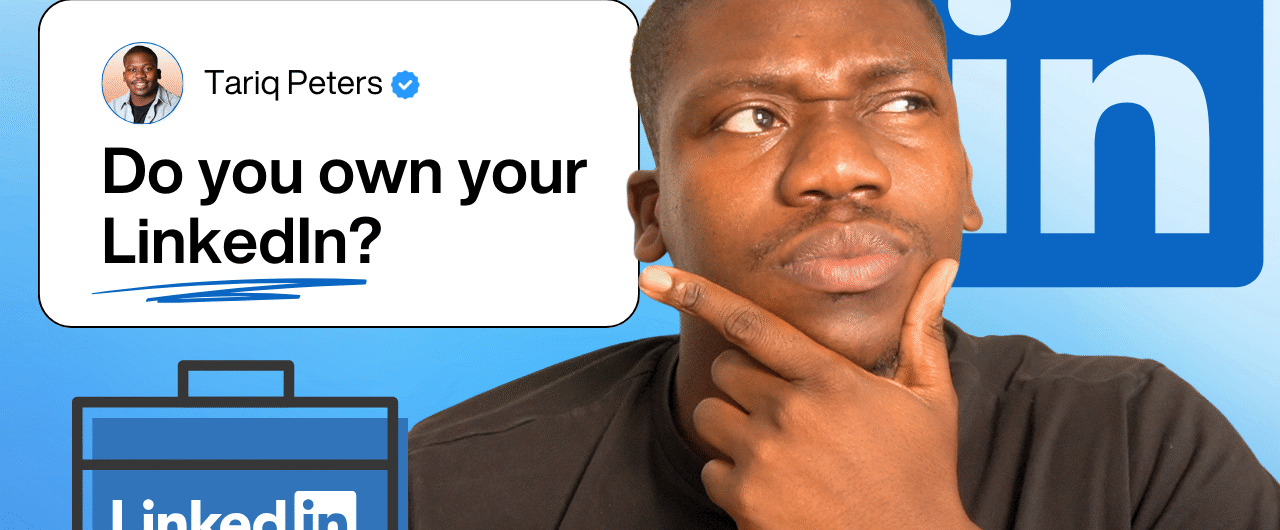
Who owns your LinkedIn page?
Is it really yours… or does your company think it belongs to them?
Because here’s the thing. A worrying number of people have shared with me that they’re being told what to post, how often to post, and what not to post. Some even get pulled up for reposting content that isn’t “on brand.” And the wildest part? None of this is in their contracts.
Let’s be clear.
If your contract explicitly states that all LinkedIn activity must be approved or controlled by your employer? Fine. You signed that. You agreed. It is what it is.
But if not?
Then it’s your platform. It has your name on it. Not theirs.
Join the £1M Visibility Blueprint
Weekly insights from my £1M personal brand journey. Strategy, visibility systems and earned media plays you can use now.
Now, I’m not saying go rogue. I’m not saying post madness and expect no consequences. This is still the internet. If you disrespect your employer publicly, or bring negative PR to the business, there’ll be repercussions. That’s just common sense.
But here’s where I draw the line:
Companies pressuring people to only post about work.
Companies guilt-tripping staff into becoming unofficial content machines.
Companies monitoring your posts like you’re on probation.
It’s exhausting. And it’s outdated.
In 2025, personal branding is not a trend. It’s not optional. It’s survival. If your name doesn’t come up when people search your skillset, you’re invisible.
So when companies act like you’re “doing too much” by posting about your achievements, sharing insights, or building community, they’re missing the bigger picture. This isn’t about ego. This is about visibility, growth, and future-proofing your career.
Here’s what I want more professionals to realise:
You can be a proud advocate of your company and still post content that reflects you. In fact, doing so makes you more valuable to your employer – not less.
Let me give you a real example.
When I worked at Hard Numbers, shout out to Paul and Darryl every time, we were encouraged to post. Not forced. Encouraged. Empowered, even. And because it came from a place of trust and autonomy, it didn’t feel like a task. It felt like alignment. So when we shouted out the agency, it was genuine. We wanted to.
That’s what employee advocacy should look like. Not pressure. Not guilt. Not silence.
Because here’s what happens otherwise.
You post nothing personal. You spend years sharing company updates, campaign wins, and branded posts. And then one day, redundancy hits. Job gone.
And when recruiters look you up? There’s no sense of who you are. Just a wall of corporate messaging. No personality. No positioning. Nothing to show your expertise outside the company.
That’s a big L. And it’s happening far too often.
So if no one has told you this yet, let me be the first:
You own your LinkedIn.
You’re allowed to post about yourself.
You don’t owe your company your entire online presence.
Yes, show up for your employer. But show up for yourself first. Because your next opportunity won’t come from reposting the latest company press release. It’ll come from someone seeing you and what you bring to the table.
And if companies are smart, they’ll see the value in having visible, respected professionals representing their brand. Not just as employees. But as advocates.
If they don’t get that? You’re better off showing them by example.
Moving Forward
The job market is still shaky. The rules are still being written. But one thing’s clear – your LinkedIn is one of your most valuable career assets. Unless you signed it away, protect it like it’s yours.
Because it is.
See you next week.