

Most people don’t think about how others meet them. They walk into rooms assuming everyone sees them the same way.
That couldn’t be further from the truth.
Everyone you meet is at a different level of awareness. Some don’t even realise they need what you offer. Others are comparing you with alternatives. And some are just waiting for one more signal to buy.
If you want investors, clients or partners to take you seriously, you need to meet them where they are, not where you are.
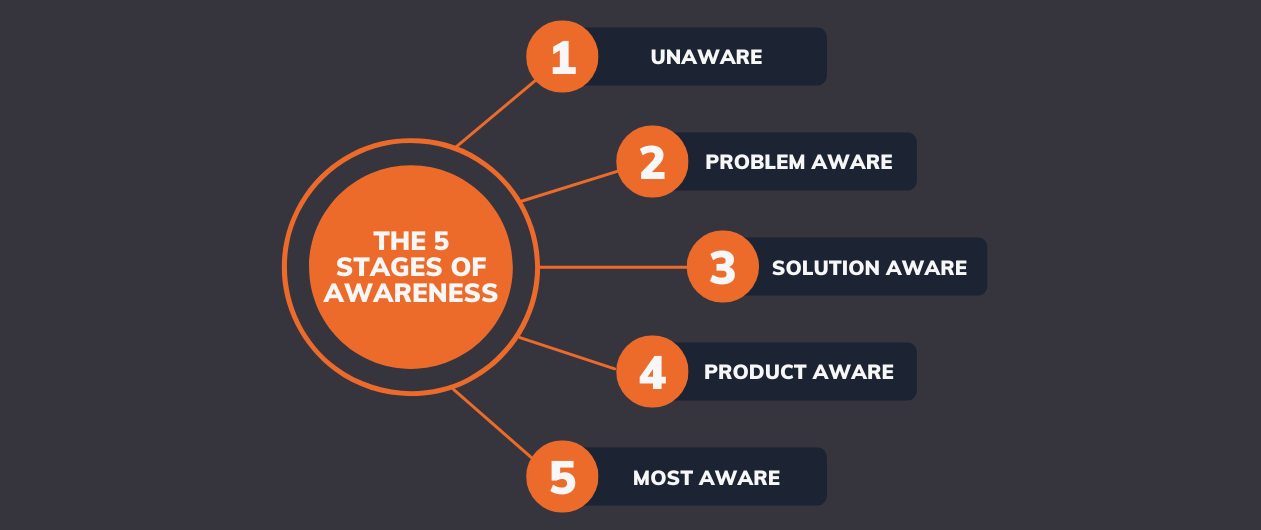
The 5 Stages Of Awareness
Adapted from Eugene Schwartz’s classic marketing model, these stages explain how people move from not knowing you to fully trusting you.
Think of them as five doors. Each person walks through a different one depending on their buying journey.
- Unaware – They don’t know they have a problem or opportunity.
- Problem Aware – They know something isn’t working, but are not sure what to do.
- Solution Aware – They know solutions exist but haven’t chosen one.
- Product/You Aware – They know about you but aren’t convinced.
- Most Aware – They trust you, they just need a clear next step.
If you talk to everyone like they’re in stage five, you’ll lose those in stage one.
If you only speak to stage one, you’ll bore those ready to buy.
The key is to adapt your message.

Join the £1M Visibility Blueprint
Weekly insights from my £1M personal brand journey. Strategy, visibility systems and earned media plays you can use now.
Stage One: Unaware
This is the toughest stage because prospective clients don’t know a problem exists just yet. I’ve been there. Early in my PR career, I assumed everyone knew that being overlooked was a business risk. They didn’t. Until they connected being unseen with lost opportunities, they didn’t think they needed help.
Your role here is to spark curiosity. Share relatable stories, industry stats or personal experiences that highlight problems people didn’t realise they had. Keep it light, simple and non-technical. You’re planting seeds.
Stage Two: Problem Aware
Now they know something’s off, but they can’t quite put their finger on how to resolve it. A founder knows their product isn’t reaching the right audience, but is unsure of the best approach, which turns into a significant pain point in business.
At this stage, don’t pitch yourself yet. Focus on showing empathy and defining the problem clearly. When you name someone’s struggle better than they can, they naturally trust you. Share content that says, “I get it, I’ve been there.” This builds trust.
Stage Three: Solution Aware
They’re searching for answers. They know help exists, they just haven’t linked it to you.
This is your chance to educate. Offer frameworks, comparisons, and practical advice. Blog posts, LinkedIn content and talks at events work well. Show that you understand the available options and explain why some work better than others. You’re positioning yourself as a guide.
Stage Four: Product/You Aware
Now they know you exist. They’ve seen your content, attended your webinar or had a chat. But they’re still deciding whether you’re the right fit.
This is where proof matters. Share testimonials, client stories, or personal wins. Show consistency in your online presence. If someone Googles you, what comes up? If it looks scattered, they’ll move on. At this stage, people want reassurance that you walk the walk.
Stage Five: Most Aware
This is the sweet spot. They already trust you and believe in you. They’ve read your posts, heard about your work or seen you speak. They’re primed to say yes; you just need to make it easy for them.
Give them one clear next step. Don’t drown them in detail. Give a clear path, whether it’s booking a call, investing or signing a contract. People at this stage don’t need convincing; they need direction.
Why This Matters For Your Brand
Many founders skip these stages entirely.
They pitch investors who are still unaware. They flood LinkedIn with content for people who already trust them, but never follow up with those who don’t.
The result? Missed opportunities.
Personal branding isn’t just about visibility. It’s about timing. The right story, told at the right stage, builds momentum. The wrong story, told too soon, creates silence.
Think about your own audience. Where are they? If you’re building authority in a new industry, most people will be unaware or problem-aware. If you’re established, many will be product-aware. Tailor your message accordingly.
Practical Ways To Apply This
- Audit Your Content: Review your LinkedIn posts, talks or website. Which stage do they speak to? Fill in the gaps.
- Segment Your Audience: Not everyone needs the same message. Consider what stage potential investors are in compared to potential clients.
- Layer Your Storytelling: Share content that moves people along the stages. A story that creates awareness today can turn into a testimonial tomorrow.
- Test and Adjust: Notice what resonates. Do people engage more when you share educational content or when you post results? Let the data guide you.
Moving Forward
Applying the 5 stages of awareness isn’t about complicating your brand.
It’s about meeting people where they are. When you learn to guide them from unaware to most aware, you stop shouting into the void and start building real traction.
That’s how you secure investors, win clients and attract partners who already see your value.
See you next week!



[…] Founders who play the long game don’t just share what’s current. They document what’s true. They create assets that speak to their future clients, the ones still lurking, researching and deciding. […]